Here you will find the newest works added to our catalogue and our latest acquisitions in Romanesque art, Gothic art and Haute Époque sculpture. Each work undergoes rigorous examination and in-depth artistic and bibliographical research to determine its dating, origin and stylistic attribution as accurately as possible.
Discover Our Latest Acquisitions
Here you will find the newest works added to our catalogue and our latest acquisitions in Romanesque art, Gothic art and Haute Époque sculpture. Each work undergoes rigorous examination and in-depth artistic and bibliographical research to determine its dating, origin and stylistic attribution as accurately as possible.
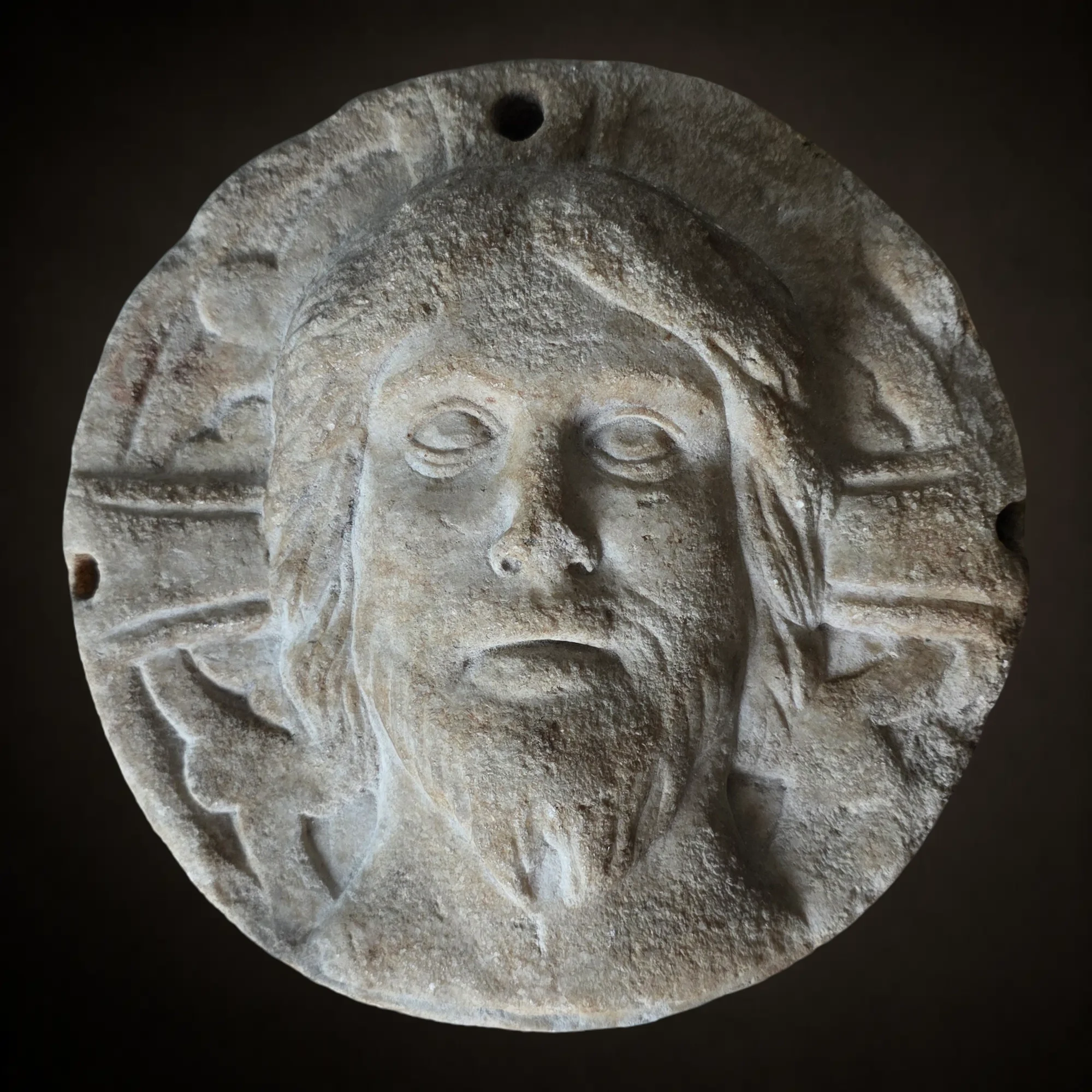
Romanesque marble patera representing Christ with a cruciform halo, diameter 21 cm, Rhone Provence, probably Arles or the Arles area, final decade of the 12th century. Former Princely Collection of the Hohenzollern family in Sigmaringen...
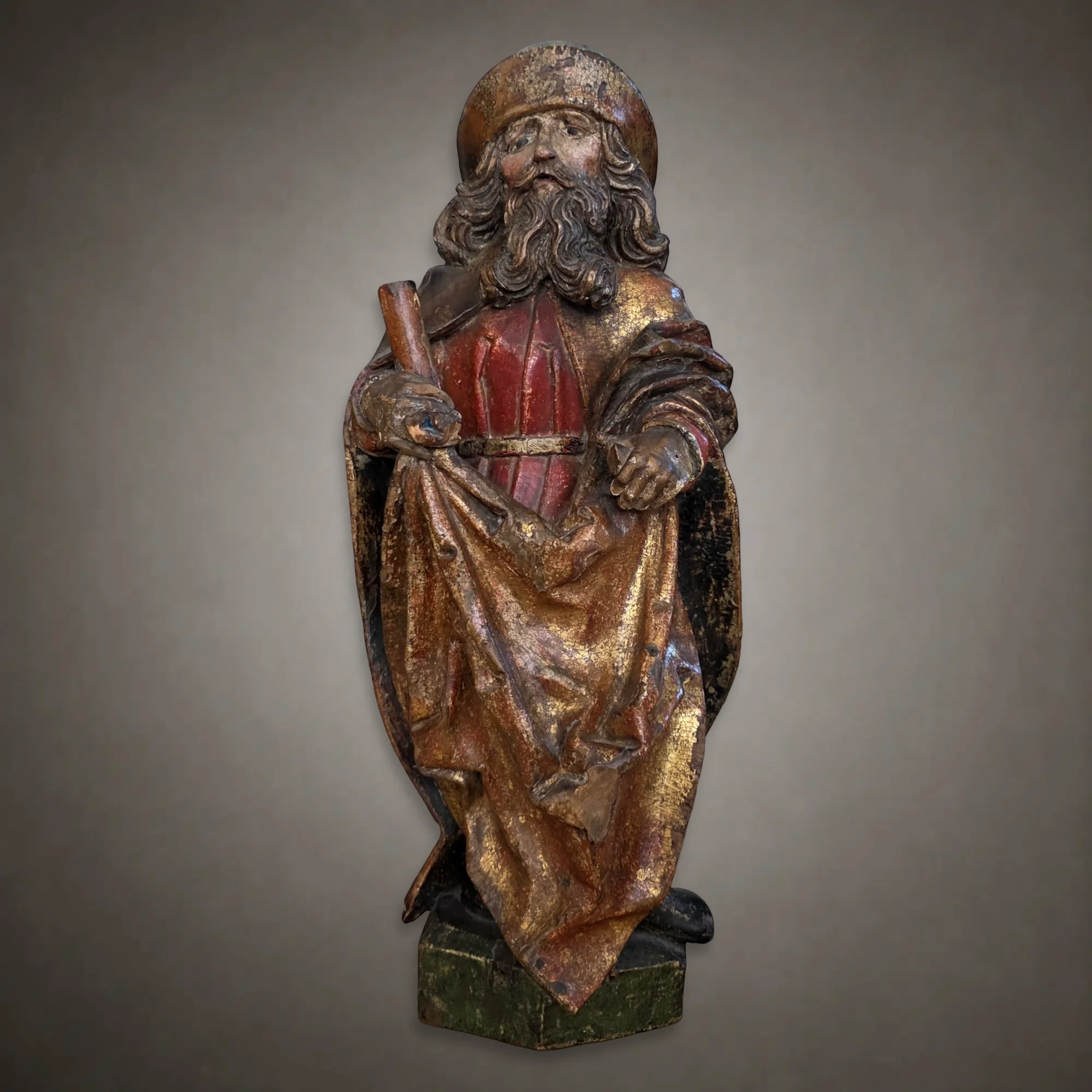
Saint James the Greater in polychromed and gilt limewood, 55 cm, Upper Rhine, Basel, circa 1515 to 1520. Basel Renaissance sculpture attributed to the workshop of Martin Hoffmann...
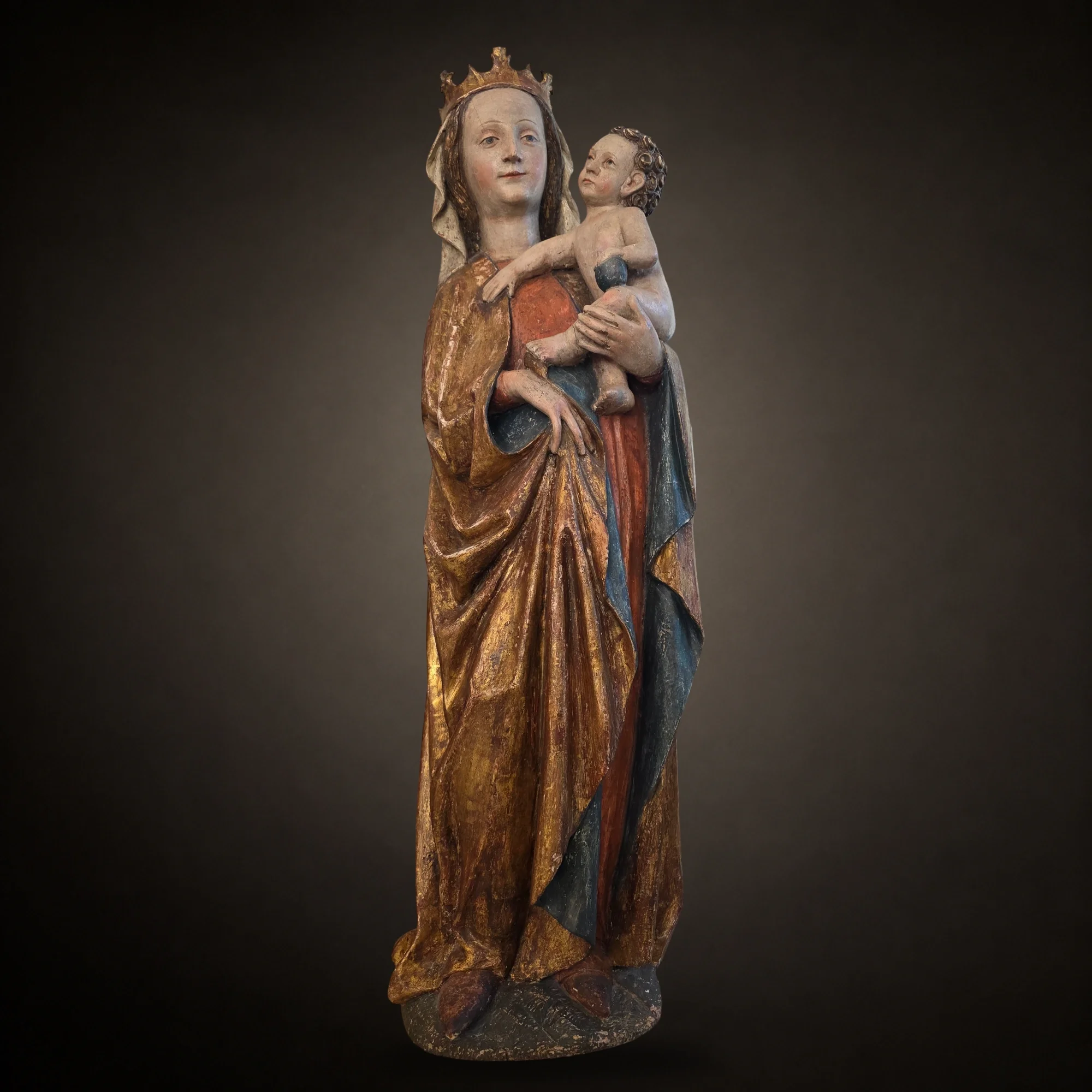
Virgin and Child in polychromed and gilded limewood, 110 cm, Southern Germany, Southern Swabia, circa 1470-1480. Important late Gothic sculpture attributed to the circle or workshop of Hans Rueland...
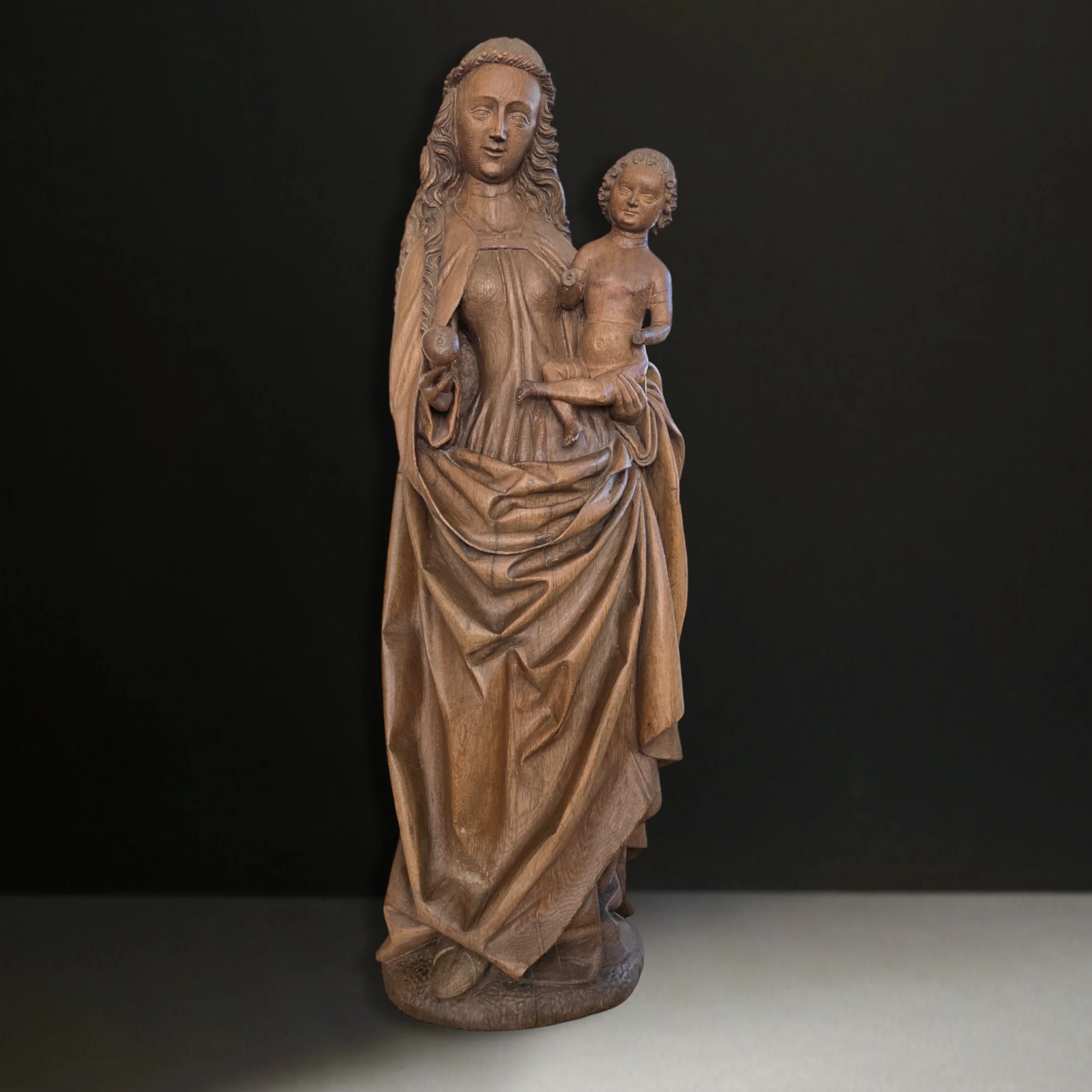
Oak Virgin and Child, 106 cm, Master of Elsloo Group, Limburg or Upper Guelders, circa 1500. Rare Late Gothic sculpture, close to the Marianums of Utrecht, Venlo and Neer...
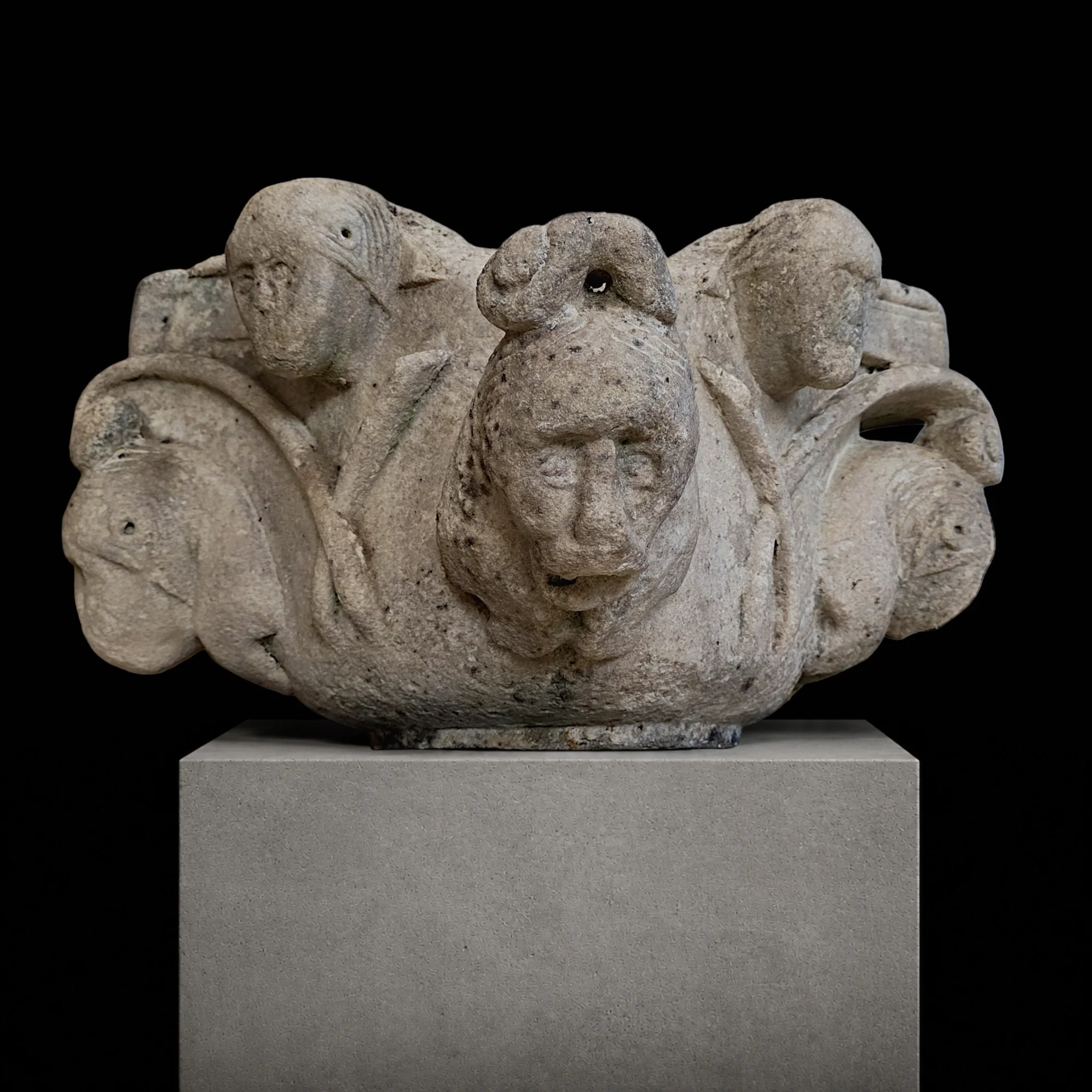
Rare Romanesque baptismal font carved from white Pyrenean marble, probably from Céret, in Roussillon circa 1170. Its masks, bird of prey and lion-like creatures exemplify the Romanesque art of Occitania...
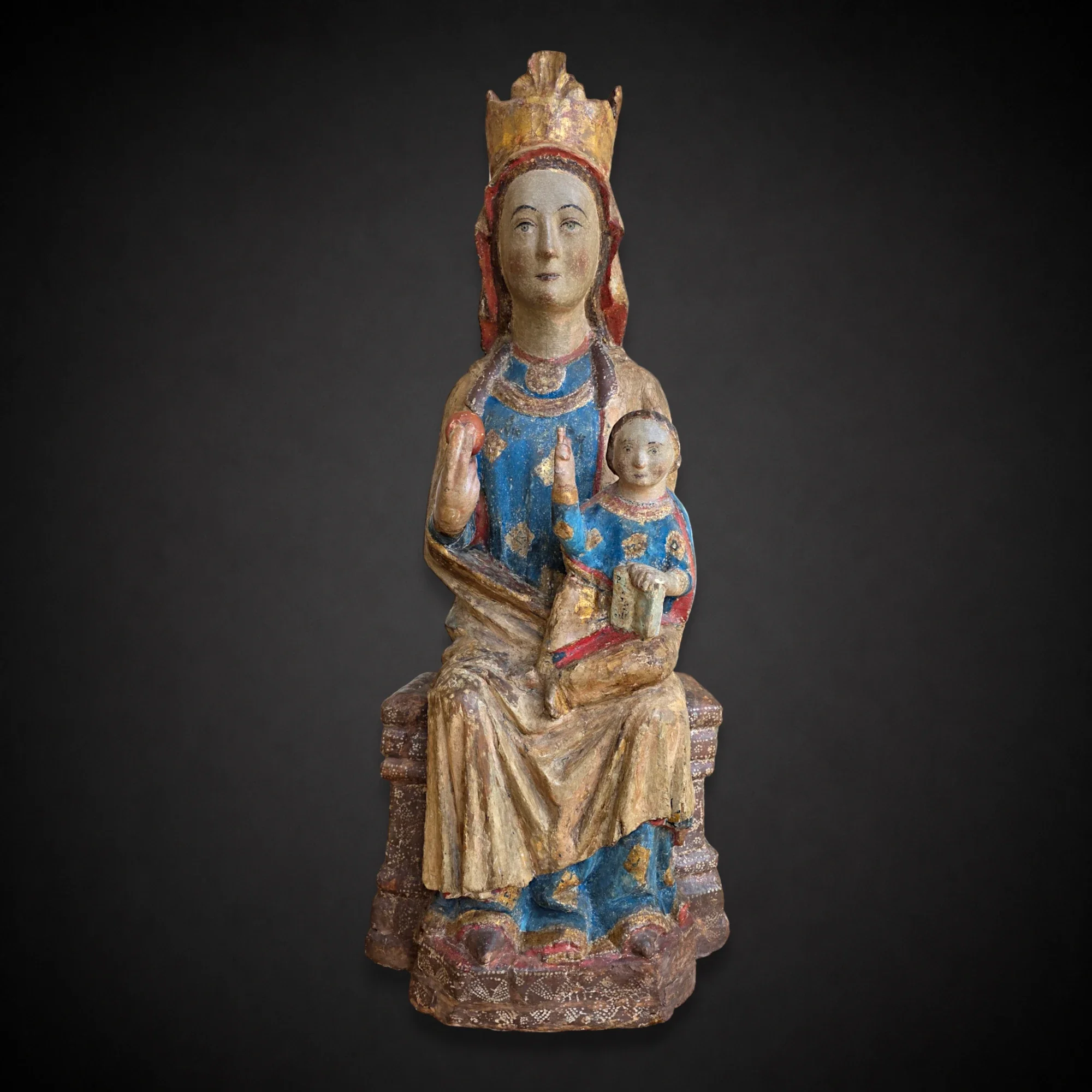
Gothic Virgin in Majesty, Aragon, circa 1300, carved polychromed wood, close to Tarazona. Rare and important medieval sculpture with ancient polychromy, Basque-Navarrese-Riojan type, with blessing Child...
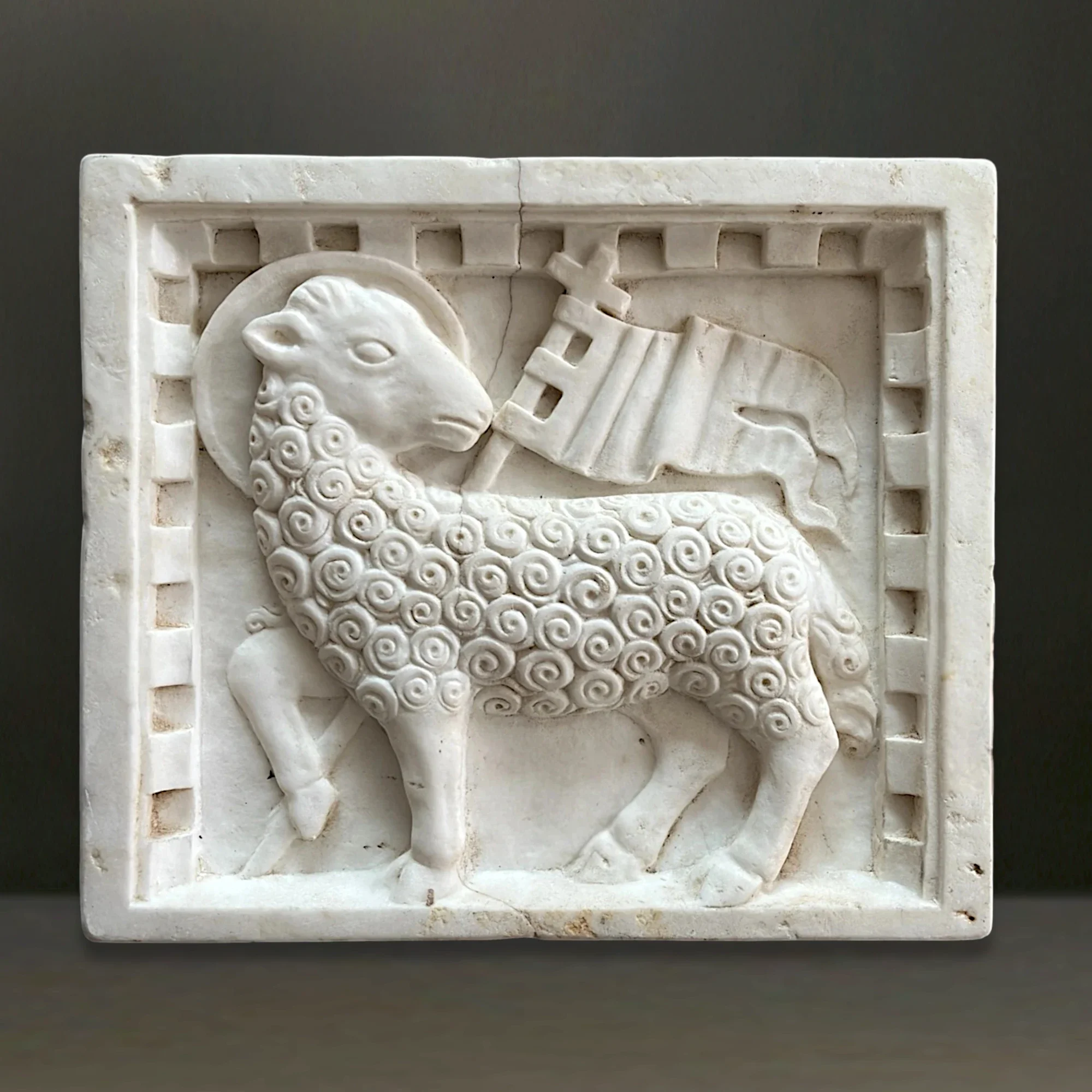
Marble Agnus Dei, Florence, Quattrocento: armorial bas-relief of the Arte della Lana, the wool guild, circa 1450...
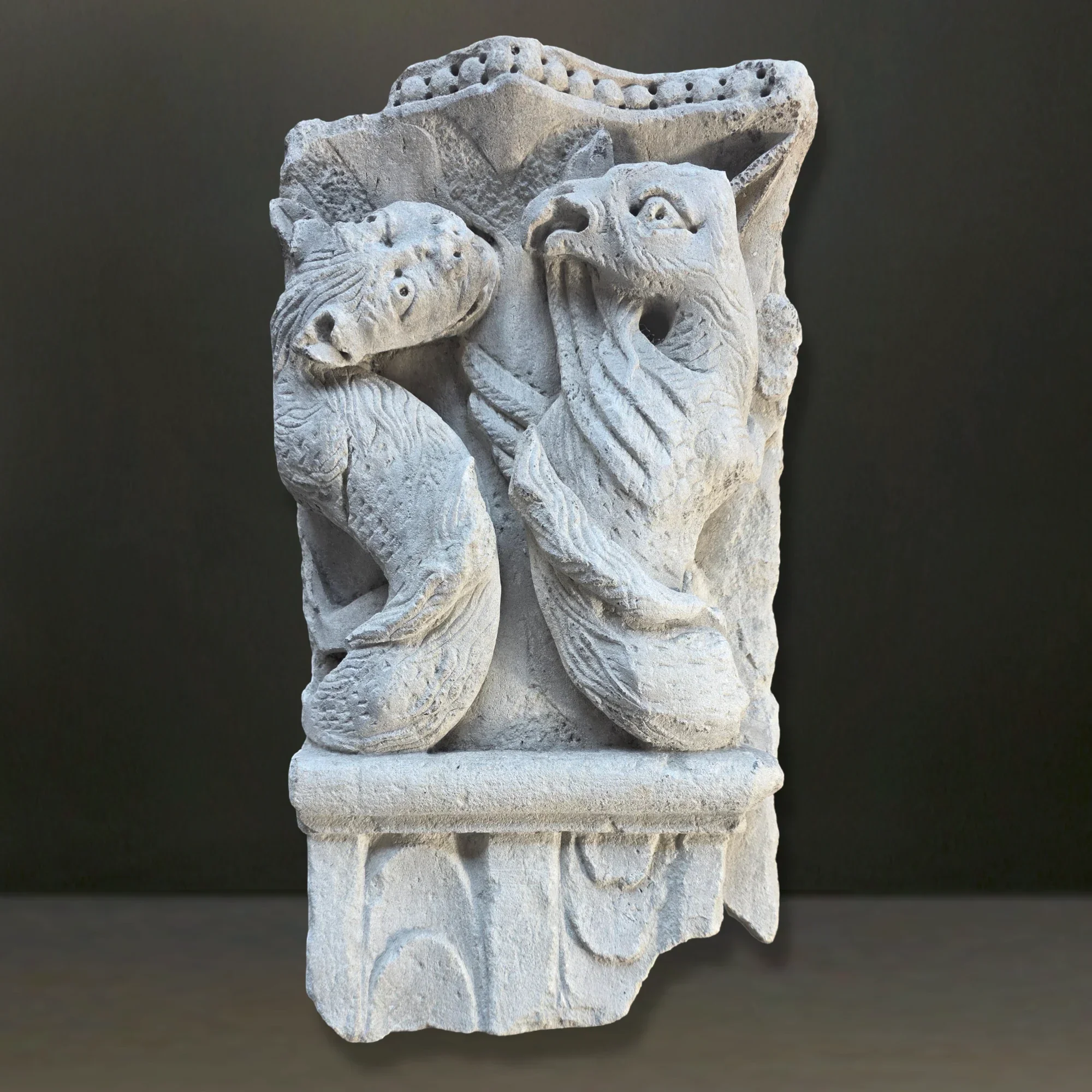
Romanesque limestone frieze panel, Southern Burgundy, Cluniac circle, 12th century. Relief with confronted griffin and asp, a rare medieval sculpture of French Romanesque art...
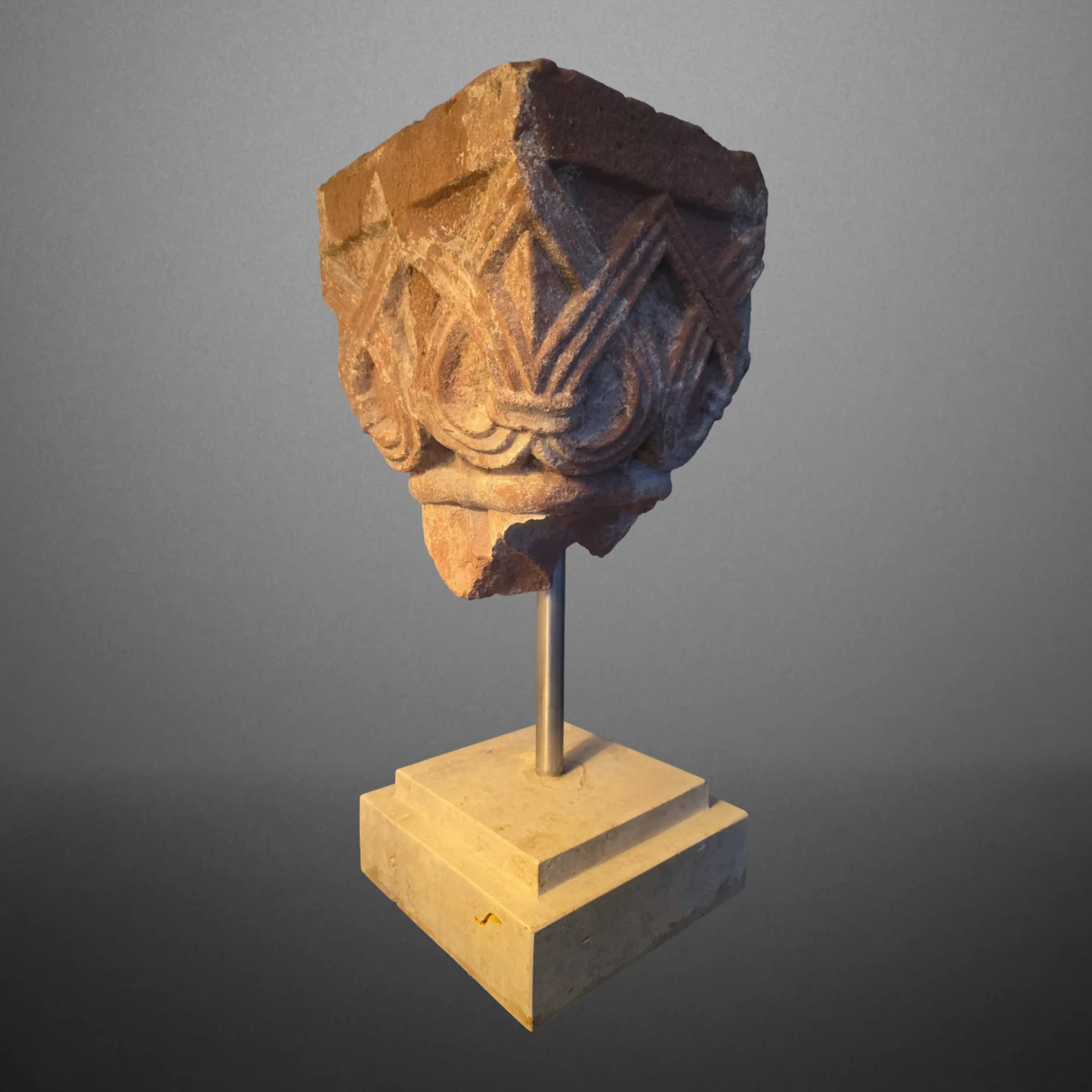
12th-century Romanesque capital in Main pink sandstone, carved with tripartite ribbon interlace. Franconia/Würzburg provenance (1150–1170), Imperial art under the Hohenstaufen...
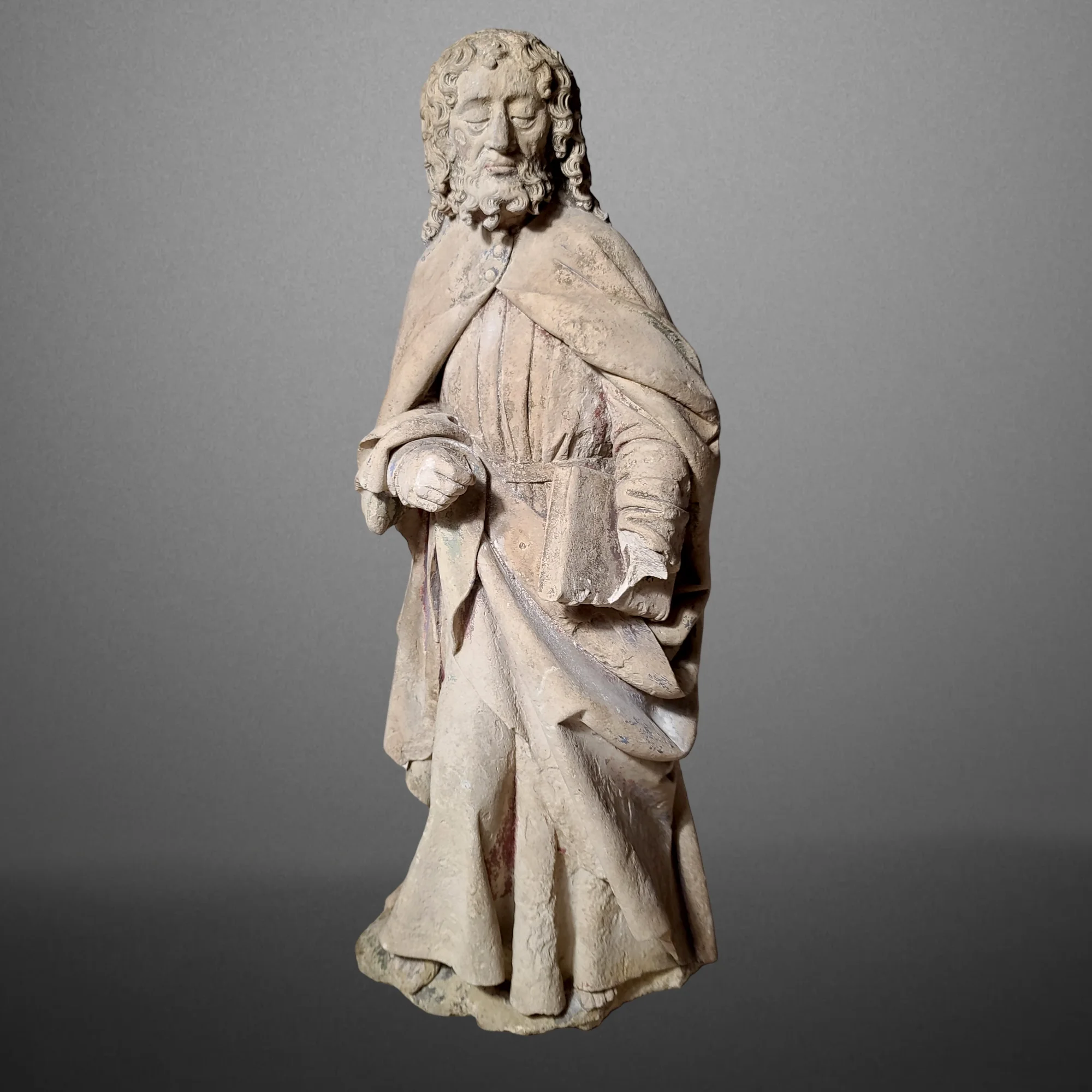
Burgundian Gothic limestone sculpture, c. 1470-1480: an apostle, probably Saint Matthew, attributed to the circle of Antoine Le Moiturier...
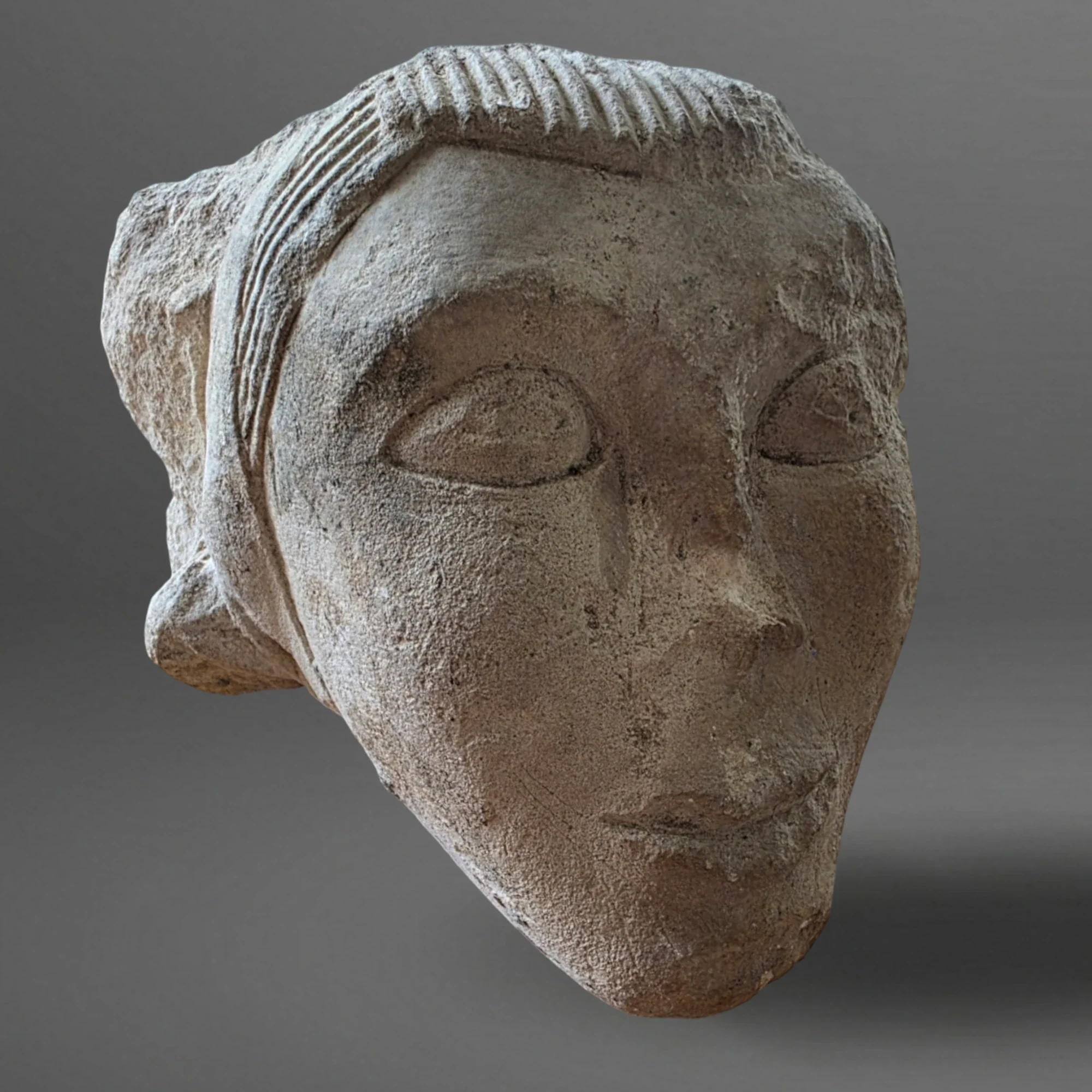
Romanesque male cornice mask from a church, Oise Valley (Beauvais), mid-12th century: hieratic face with almond eyes, striated hair, medieval sculpture...
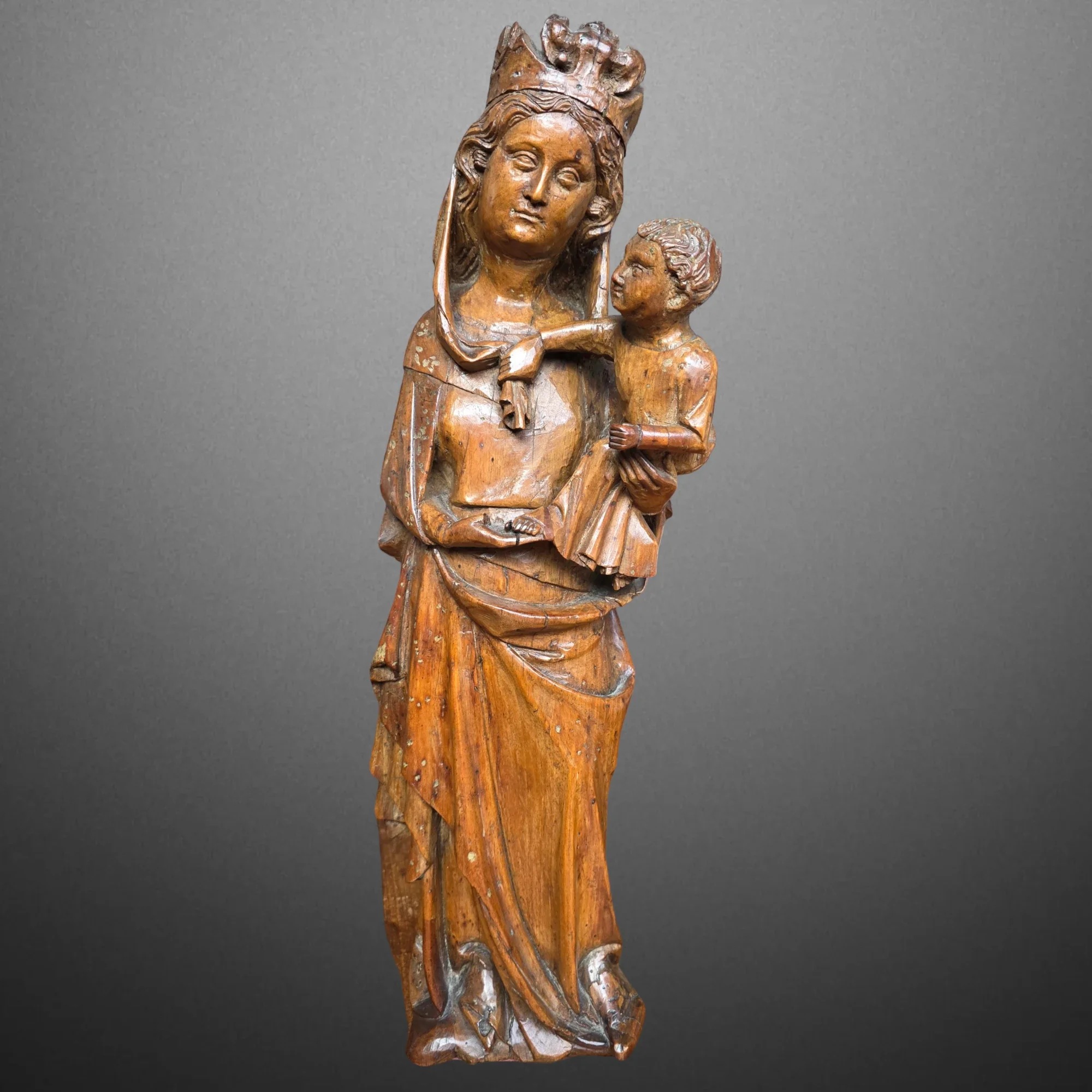
Walnut Gothic Virgin and Child, Eastern France (Barrois/Lorraine), circa 1340–1360. Rayonnant courtly style, lively drapery, intended for private devotion...
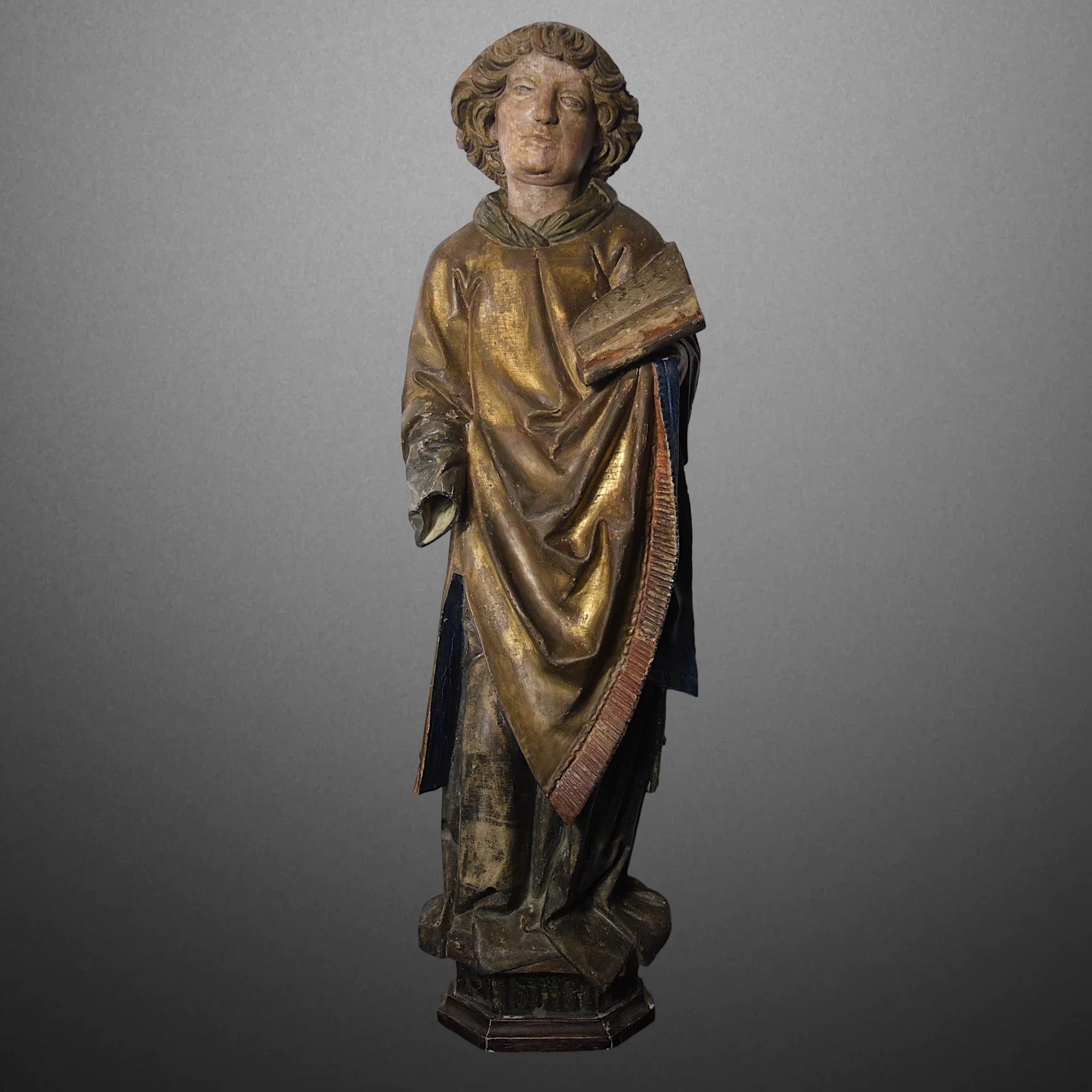
Saint John the Evangelist, late Gothic German sculpture in polychrome limewood, Saalfeld school circa 1500, attributed to Hans Gottwald von Lohr, close to Lendenstreich...
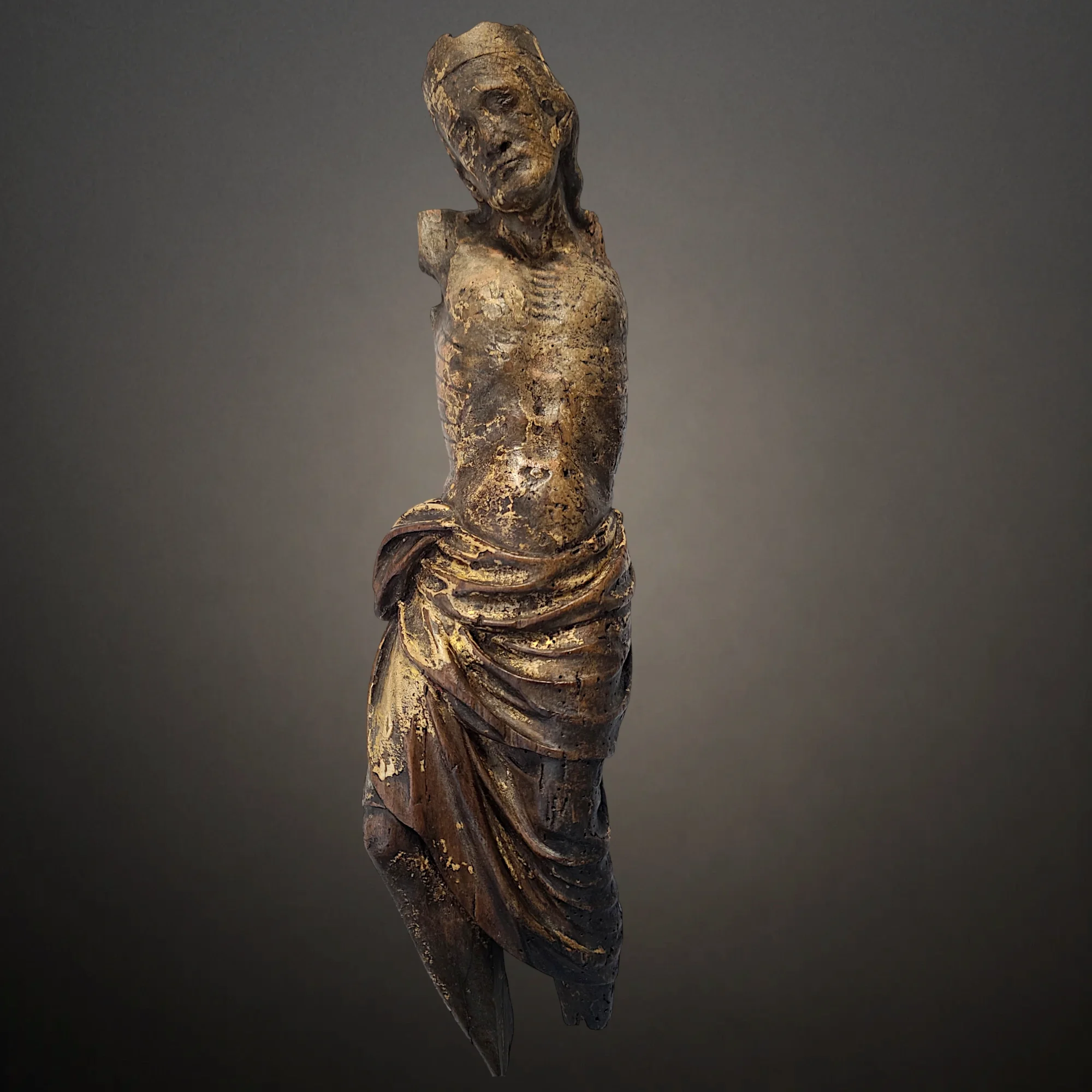
Rare Crowned Crucified Christ carved in polychromed and gilded walnut, sculpted circa 1260 to 1270 on the borders of northern Burgundy and southern Champagne. This French Gothic sculpture combines the royal crown inherited from the Christus Rex tradition with an elongated body, an emaciated thorax and an asymmetrical perizonium characteristic of the development of Rayonnant Gothic. Significant remains of early polychromy and gilding are preserved...
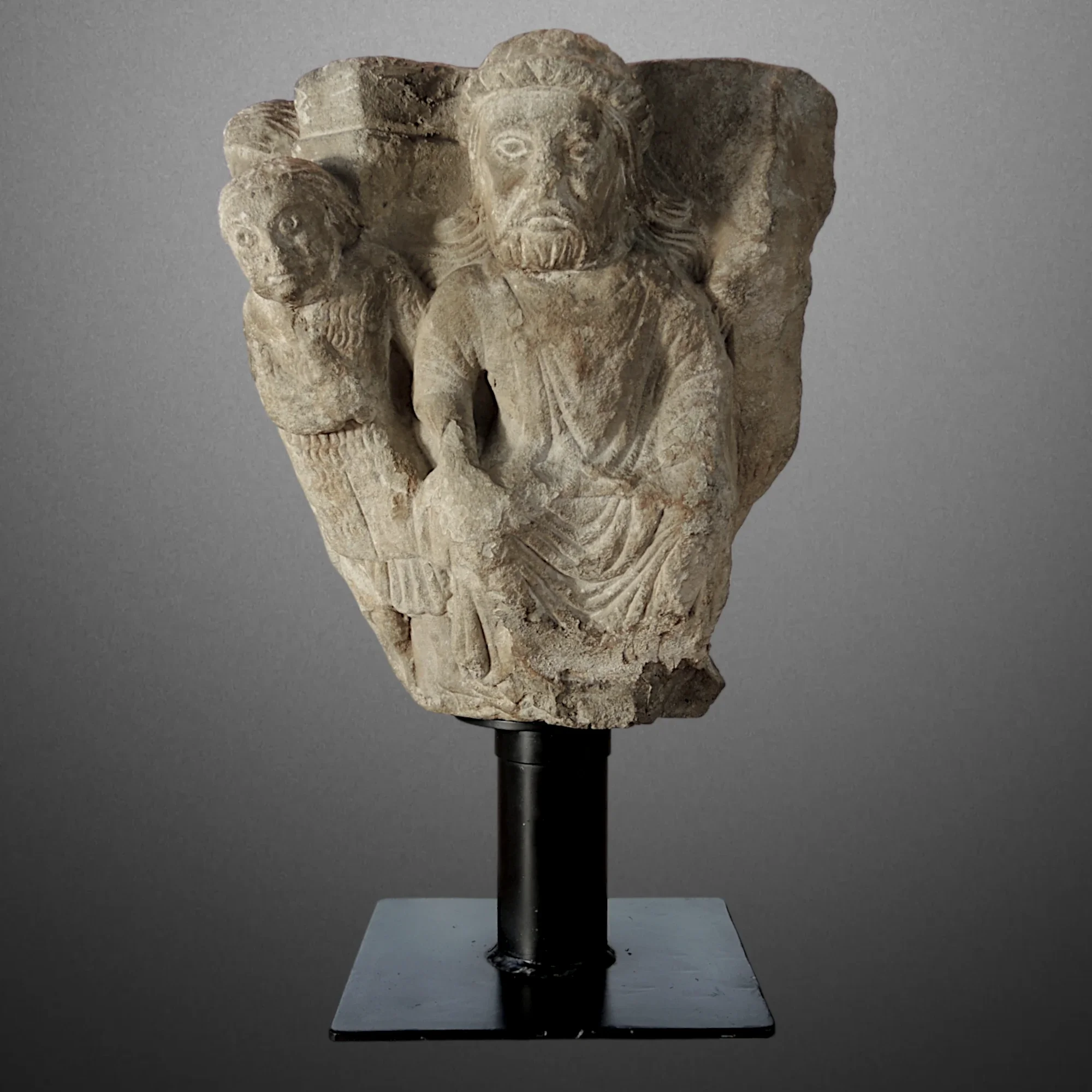
Provençal Romanesque historiated capital from the 12th century, Herod and the Massacre of the Innocents, in dolomitic limestone, closely related to Saint-Trophime in Arles and Avignon, a rare medieval collectors’ sculpture...
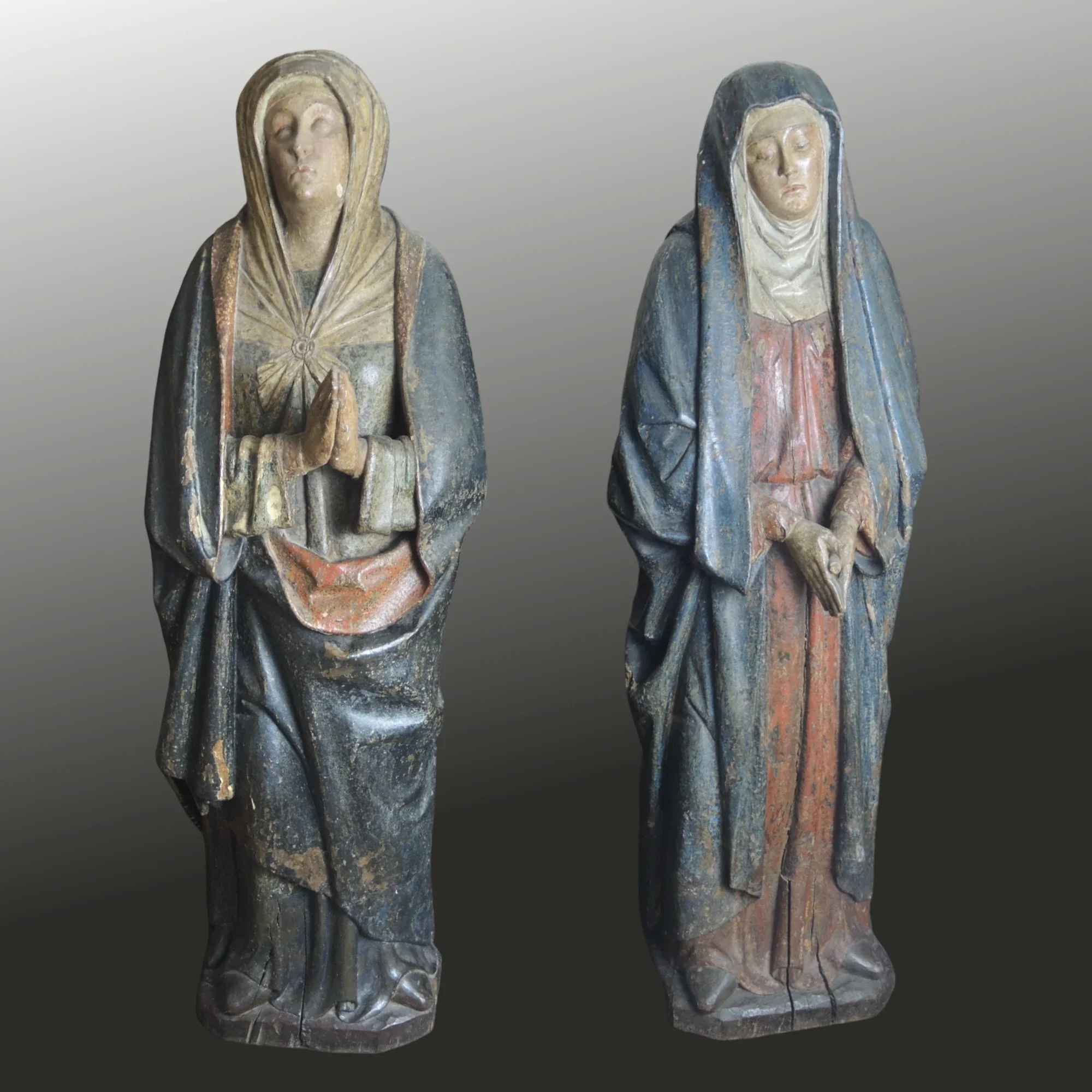
Elements of a Lamentation of Christ in polychrome walnut, two life-size holy women, late 15th century, Albi region, attributed to the Master of Monestiès; polychromy preserved; ex-collection Édouard Bresset...
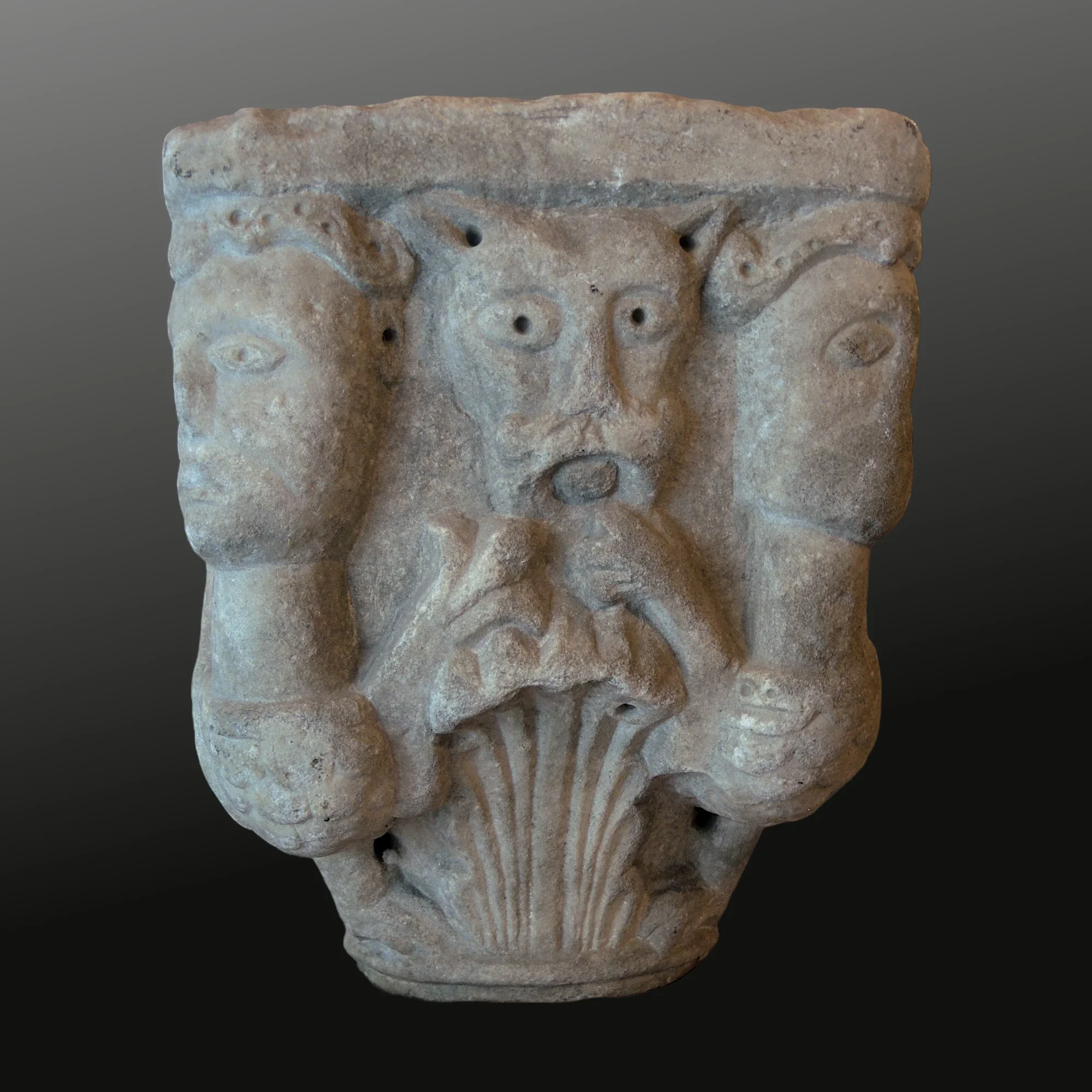
Romanesque marble capital (Rhône Valley / Velay, 12th c.): central mascaron, winged sirens with serpentine tails, acanthus, angular busts. Medieval sculpture, iconography of temptation...
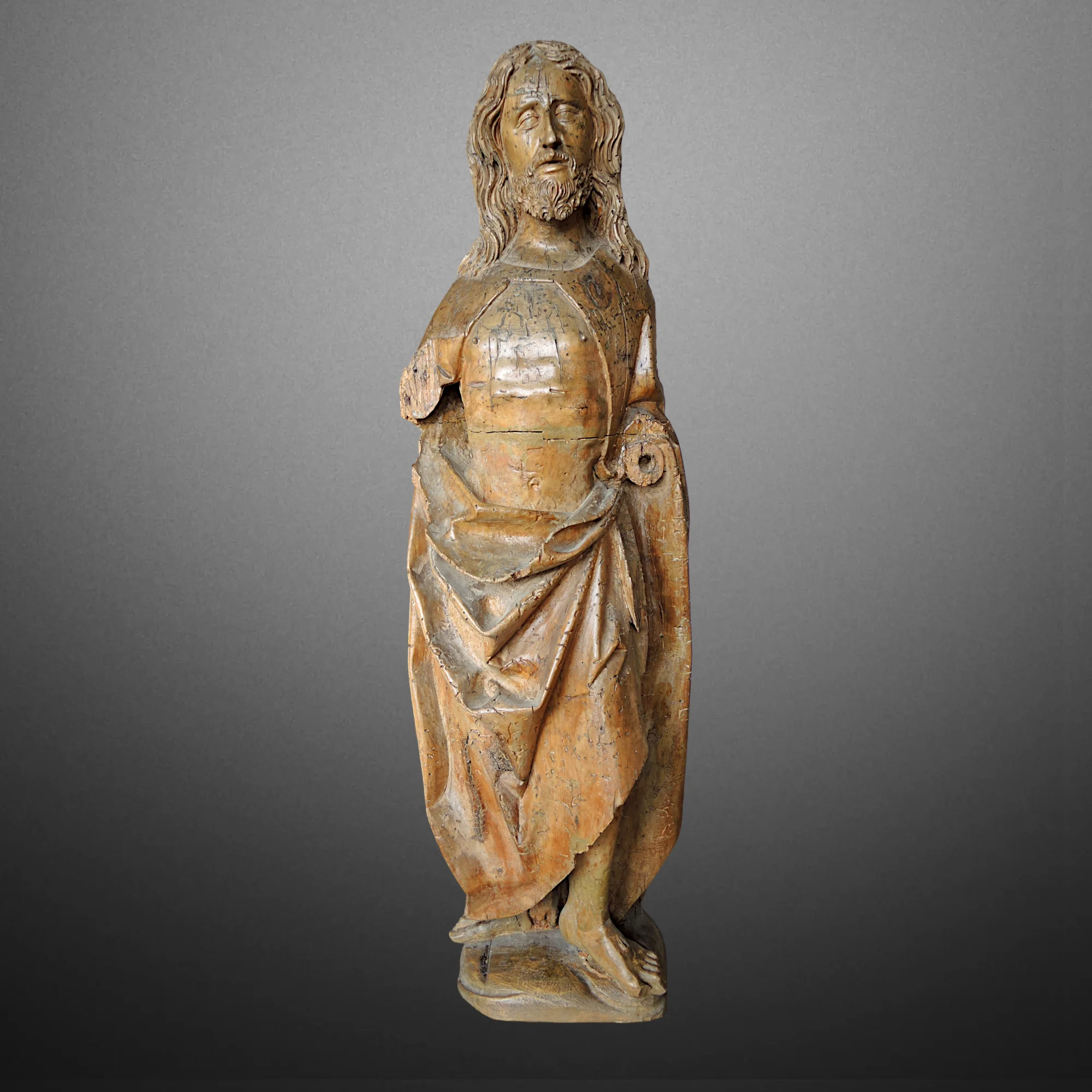
Risen Christ standing in subtle contrapposto, circa 1490–1510, limewood carved in the round and hollowed at the back, attributed to the workshop of Niklaus Weckmann...
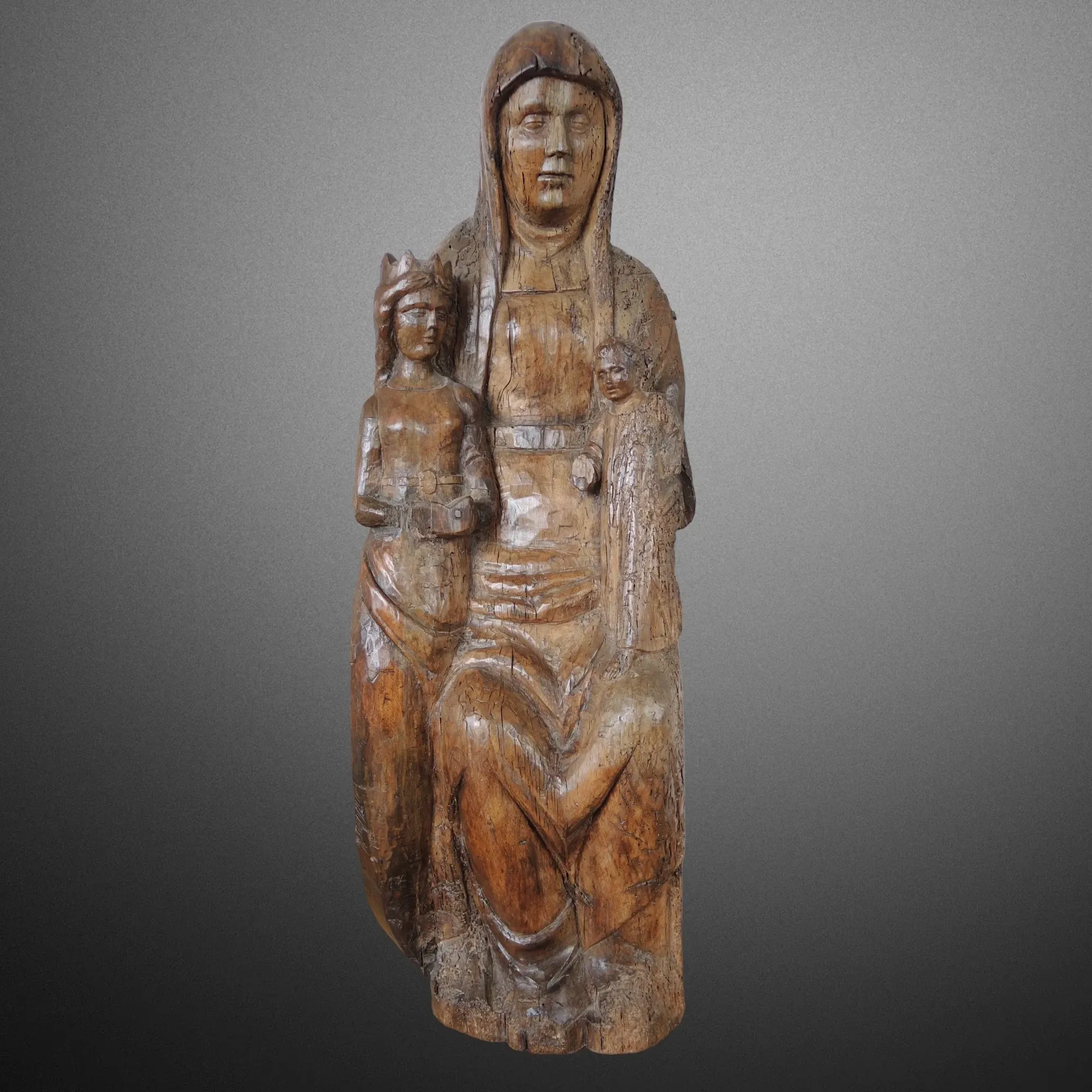
Important Saint Anne with the Virgin and Child (Anna Selbdritt), Upper Rhine, late 13th c.: Gothic elm-wood sculpture, hollowed back, Romanesque–Gothic transition, Lake Constance...
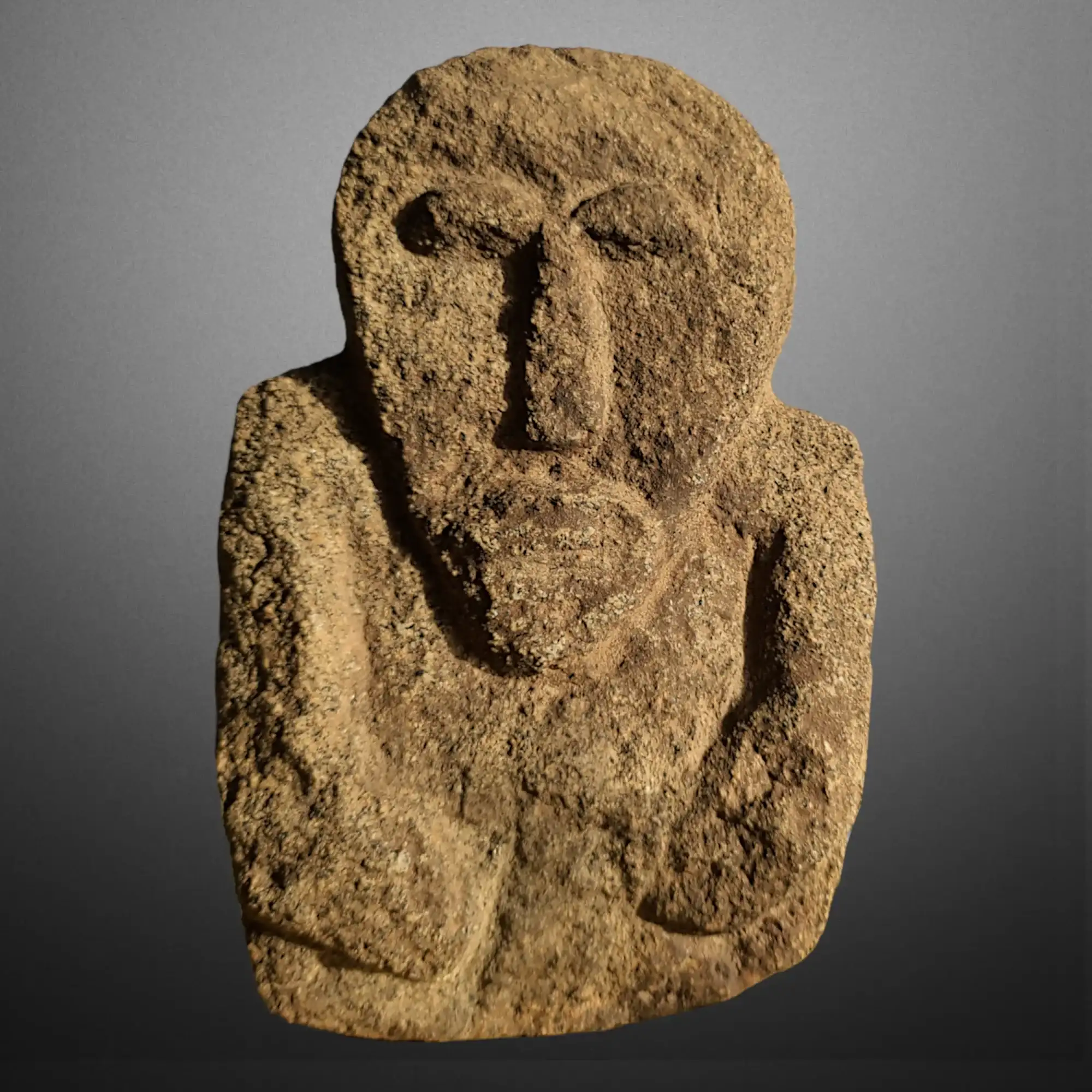
Granite reliefs, early Irish Christian Insular art from Ulster (8th–11th c.), frontal busts with prominent eyes and crossed arms; one holds a cross pattée...
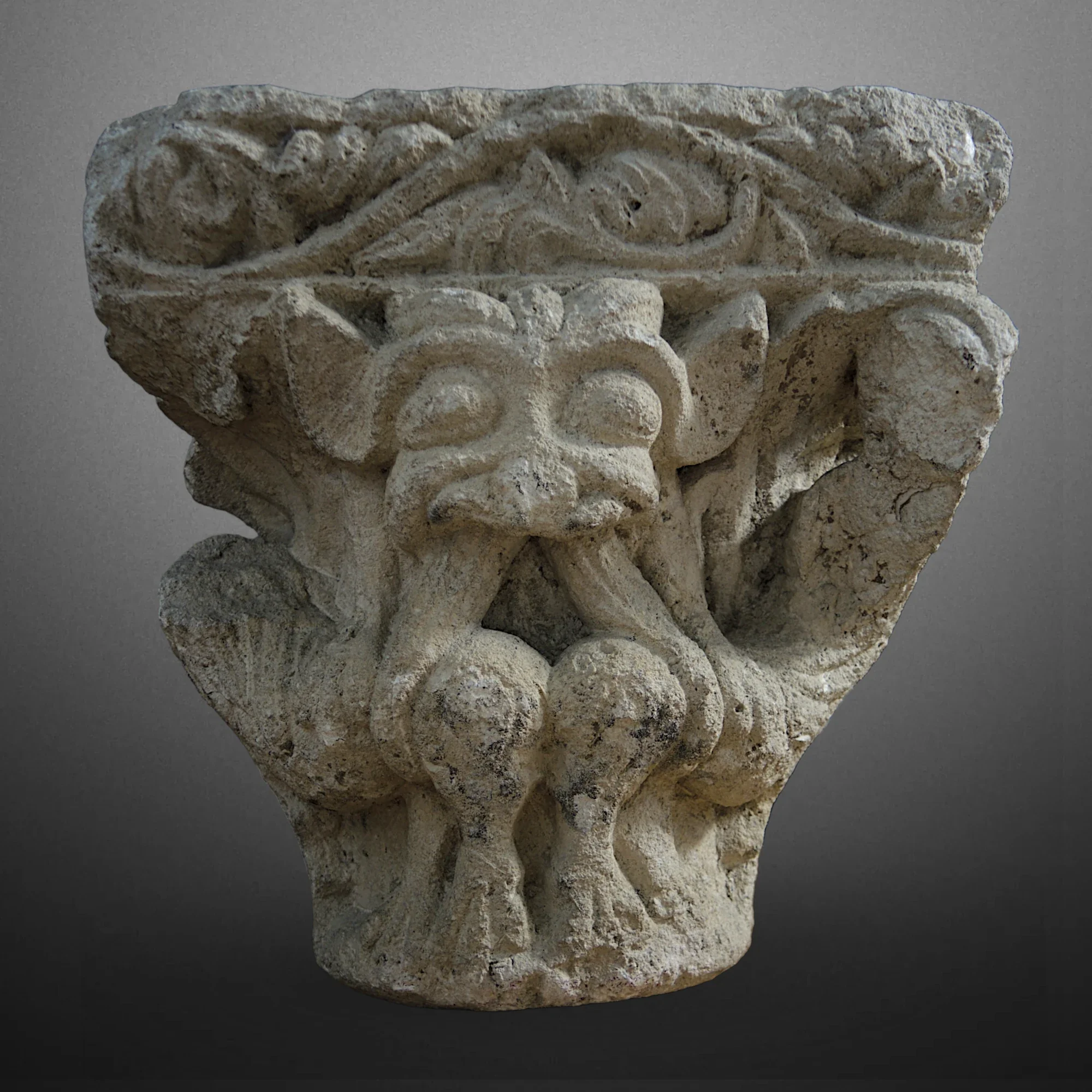
Romanesque capital from 12th-century Occitania, worked in limestone on all faces with high relief of mythical creatures and foliage ornamentation typical of the period...
Continue exploring our catalogue of early sculpture by period. The links below provide access to our collections of ancient, Romanesque and Gothic art, bringing together statues, reliefs and architectural elements selected by Ekinium Gallery.
Browse works of art by period