
Origin : Oise Valley, France.
Medium : Limestone.
Size : Height: 18 cm
Period : Circa 1150.
Condition : Slight erosion
Price : 3 500€
REF. 286
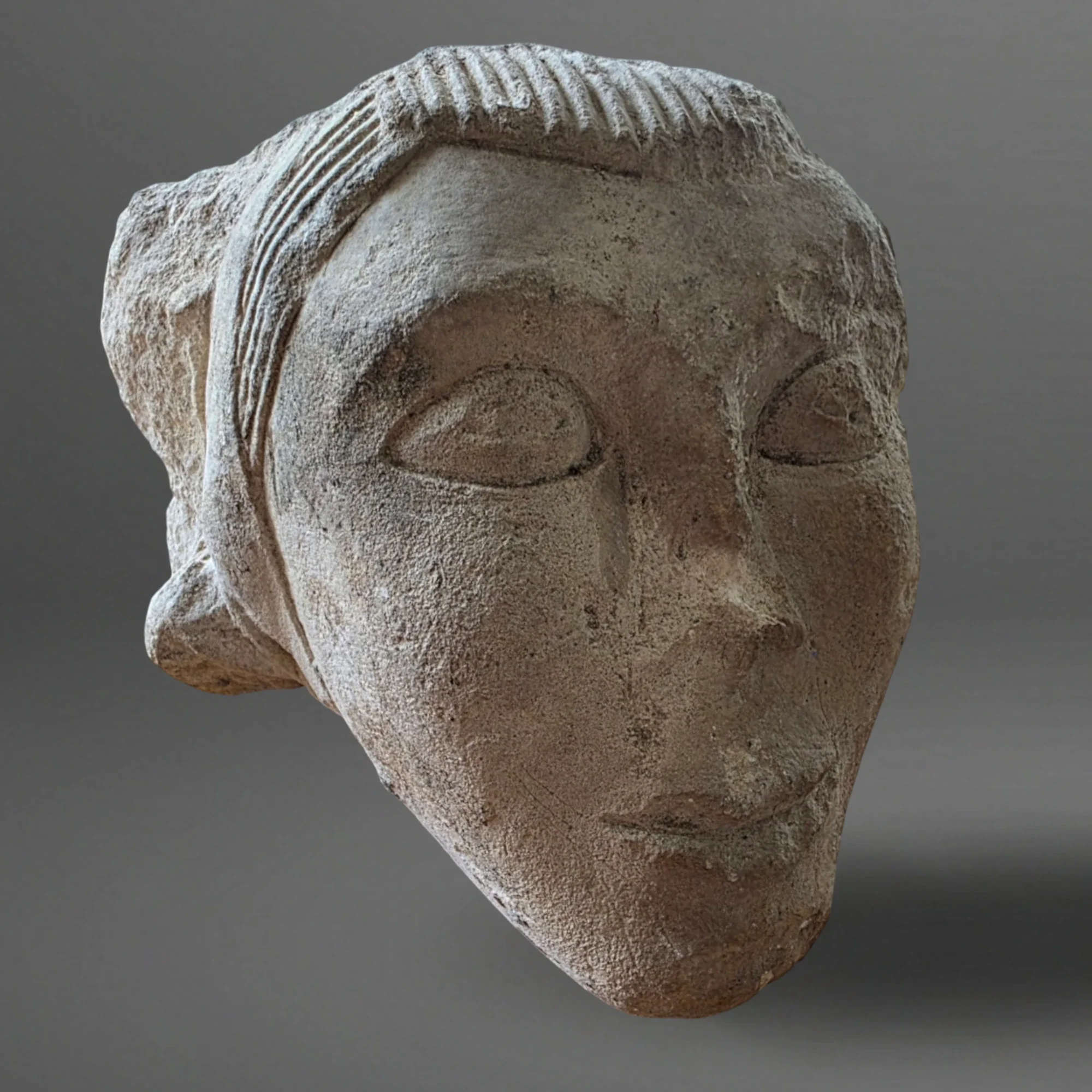
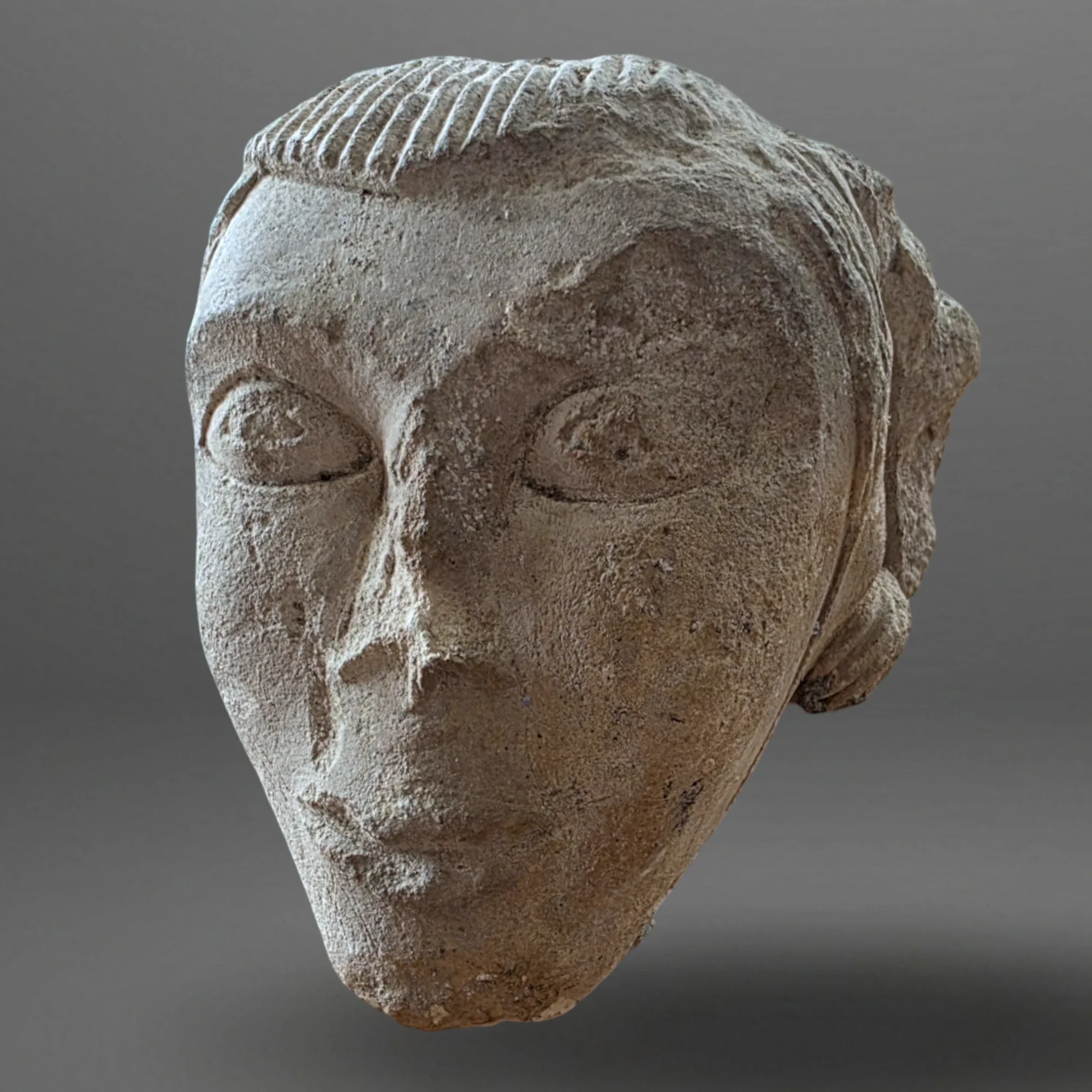
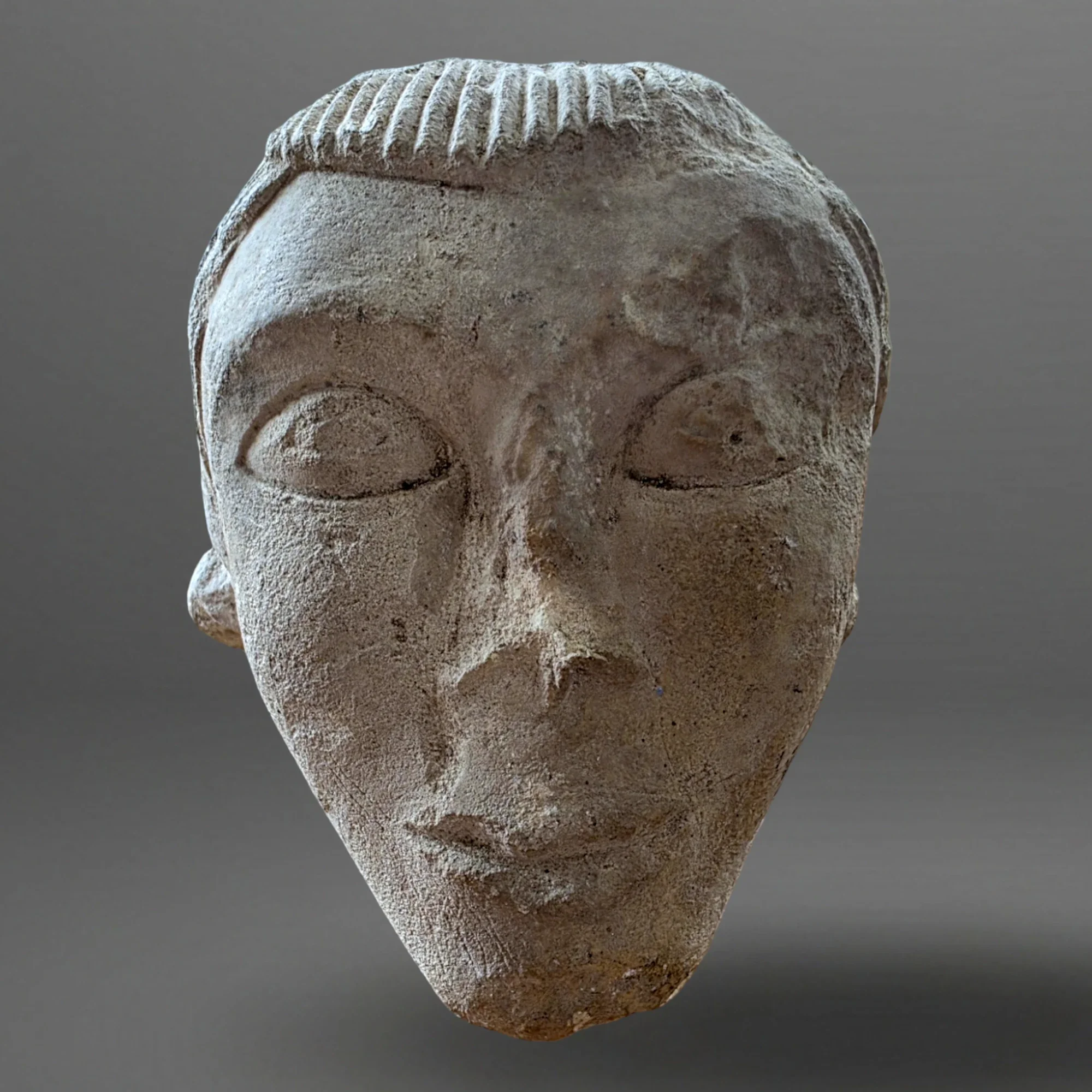
Romanesque mask – Cornice element. Oise Valley.
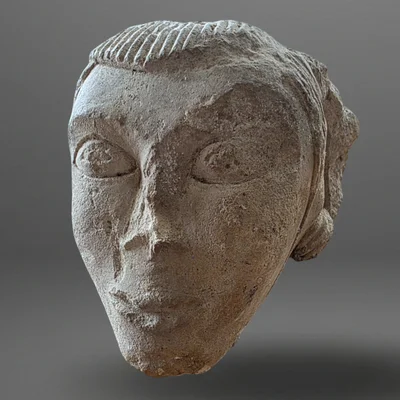
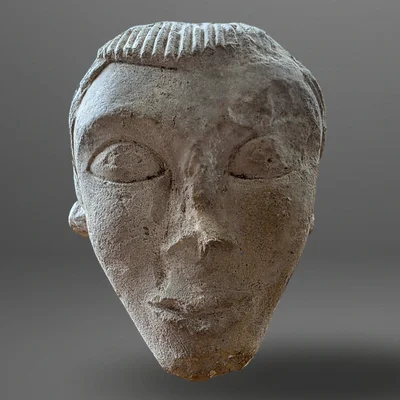
Male mask, a cornice element from a Romanesque church. The almond-shaped face narrows markedly toward a slim, prominent chin. This inverted triangle structure is typical of certain regional schools, in Artois or the Oise Valley. The eyes are the most striking feature: almond-shaped and slightly bulging, they are defined by sharply cut, hollowed eyelids. The absence of a carved pupil suggests an intentional hieratic effect. The hair is rendered in a graphic, geometric manner: parallel vertical incisions form a straight fringe, while at the sides the hair follows the contour of the skull, separated from the face by a slight ridge evoking a headband. These features link the mask to productions from the Oise Valley around the mid-12th century.
The typology of this mask helps refine its origin: it is probably a Beauvaisine cornice element, an architectural feature that spread through the Oise Valley from the second quarter of the 12th century onward. In the first phase, the arches are thick and the masks bulky; then, by the second quarter of the 12th century, the arcading becomes more slender and the faces more hieratic and less grotesque.
If our mask is the heir to the cornice masks of Villers-Saint-Paul, it shows a more advanced character: the more elaborate treatment of the eyes and the systematic rendering of the hair with parallel striations are markers of stylistic maturity. This piece is a remarkable milestone in transitional sculpture in the lower Oise Valley around the mid-12th century.
Full file available on request.
References consulted:
·La corniche Beauvaisine. Vergnet-Ruiz Jean. In: Bulletin Monumental, vol. 127, no. 4, 1969. pp. 307–322.
·L'art roman, René Crozet, 1996 - Frank Horvat and Michel Pastoureau, Figures romanes, 2001.
In-depth study of the artwork
| Subject: | male mask, element of a Beauvaisine cornice |
|---|---|
| Material: | limestone |
| Dimensions: | height 18cm |
| Origin: | Oise, France |
| Dating: | circa 1140-1160 |
| Condition: | slight erosion |
| Reference: | 286 |
Description
This male limestone mask originally formed part of a cornice from a Romanesque church. The almond-shaped face tapers markedly toward a narrow, prominent chin. This "inverted triangle" structure is typical of certain regional schools in Artois or the Oise Valley.
The eyes are the most striking element: almond-shaped and slightly globose, they are defined by eyelids with sharp, carved edges. The absence of drilled pupils suggests a deliberate hieratic intent. The hair is treated in a graphic, geometric manner: parallel vertical incisions represent a straight fringe, while on the sides, the movement of the hair follows the contour of the skull, separated from the face by a light roll evoking a headband. These characteristics connect this mask to the productions of the Oise Valley toward the mid-12th century.
Geographic and Stylistic Context
The typology of this mask allows for a precise origin: it is likely an element of a Beauvaisine cornice, an architectural feature that spread throughout the Oise Valley starting in the second third of the 12th century. In the first phase, the arches were thick and the masks voluminous; then, toward the second third of the 12th century, the arcading refined, and the faces became more hieratic and less grotesque.
While our mask is heir to the cornice masks of Villers-Saint-Paul, it presents a more evolved character: the more elaborate treatment of the eyes and the systematization of the hair with parallel striations are markers of style maturity. This piece constitutes a remarkable milestone in transitional sculpture in the lower Oise Valley toward the mid-12th century.
Consulted Works
- • VERGNET-RUIZ, Jean, “La corniche Beauvaisine”, Bulletin Monumental, vol. 127, no. 4, 1969, pp. 307-322.
- • CROZET, René, L'art roman, 1996.
- • HORVAT, Frank & PASTOUREAU, Michel, Figures romanes, 2001.